- Principal Investigator: Dr Marianne Hem Eriksen
- Postdoctoral Researcher in Osteoarchaeology: Dr Emma Tollefsen (2022-2025)
- Postdoctoral Researcher in Osteolarchaeology: Dr Veronica Tamorri (2024-)
- Postdoctoral Researcher in Old Norse language and literature: Dr Alex Wilson (2024-)
- PhD Researcher in Body-Imagery: Elisabeth Aslesen (2022-)
- PhD Researcher in Human-Animal Relations: Renate Larssen (2022-)
- PhD Researcher in childhood and the life-course: Bradley Marshall (2022-)
- Project friends and affiliates
- Dr Katherine Marie Olley, Assistant Professor of Viking Studies, University of Nottingham
- PhD Researcher in mortuary identities, Emma L. Thompson (2023-)
- Postdoctoral researcher Dr Kevin Kay (2024-)
- Dr Sam Leggett, Lecturer in Computational Archaeology, University of Edinburgh
- Dr Vasiliki Louka, University of Leicester
- Research Support Administrator: Krupesh Mistry
- International advisory board
- Professor Neil Price, Uppsala University
- Professor Lotte Hedeager, University of Oslo
- Professor Marie Louise Stig Sørensen, University of Cambridge
- Dr Stefka G Eriksen, The Norwegian Institute for Cultural Heritage Research
- Dr Ben Raffield, Uppsala University
- Dr Elise Naumann, The Norwegian Ministry for Research and Higher Edication
- Dr Oliver Harris, University of Leicester
- Dr Sarah Inskip, University of Leicester
- Dr Jo Appleby, University of Leicester

Principal Investigator:
Dr Marianne Hem Eriksen
Marianne is Principal Investigator and team leader for Body-Politics. She is Associate Professor of Archaeology at the School of Archaeology and Ancient History, University of Leicester, a member of the Young Academy of Europe, winner of the Philip Leverhulme Prize 2022, and an AHRC / BBC New Generation Thinker 2023.
Marianne’s research ranges topics from infancy, power (and the powerless), to movement, dreams and complex concepts the self in the past. Her research has centred three main axes of late prehistoric and early medieval Scandinavia: the entwinement between architecture and inhabitants; the complex relationships between the living and the dead; and the social dynamics and politics of everyday life. Often, she has worked with the links between architectural spaces and human bodies, by considering how prehistoric houses are built by bodies, produce certain bodily experiences, can be conceptualised as bodies themselves – and how dead bodies, parts and whole, are linked to domestic space. Marianne has a strong interest in the lived experiences of inequality and gender.
Marianne leads the project overall and is principally responsible for the work package Sexual objects, sexual bodies.
Contact: m.h.eriksen (a) le.ac.uk

Postdoctoral Researcher in Osteoarchaeology:
Dr Emma Tollefsen (2022-2025)
Emma recently completed her PhD at the University of Manchester, and is a Fellow of the Royal Anthropological Institute in London, a member of the British Association for Biological Anthropology and Osteoarchaeology, and committee member of the International Bog Body Research Network.
Emma’s research ranges from the funerary archaeology of Bronze Age and Iron Age Britain and continental Europe, investigating mummification and past curation of ancient human remains, to museology and conservation, particularly the ethics of display of human remains in museum settings. She has an interest in exploring ideas of mobility, identity and gender in past societies. Her PhD thesis, “Halting Death in Its Tracks: Scientific Methods and Theoretical Interpretative Frameworks for Investigating Curation in Iron Age Britain (c. 800 BC – AD 100)”, re-conceptualised British Iron Age funerary customs. Her research provided new insights into how differential curation might be achieved and how these practices allowed for more complex temporalities of burial and deposition – bringing both a practical and ideological notion of intervention in time and decay – transforming our understanding of mortuary practices in the first millennium BC.
Emma heads the work package ‘Body-Objects’ of the Body-Politics project, recording, documenting and investigating human remains deposited in settlements and wetlands from 1st millennium CE Scandinavia.
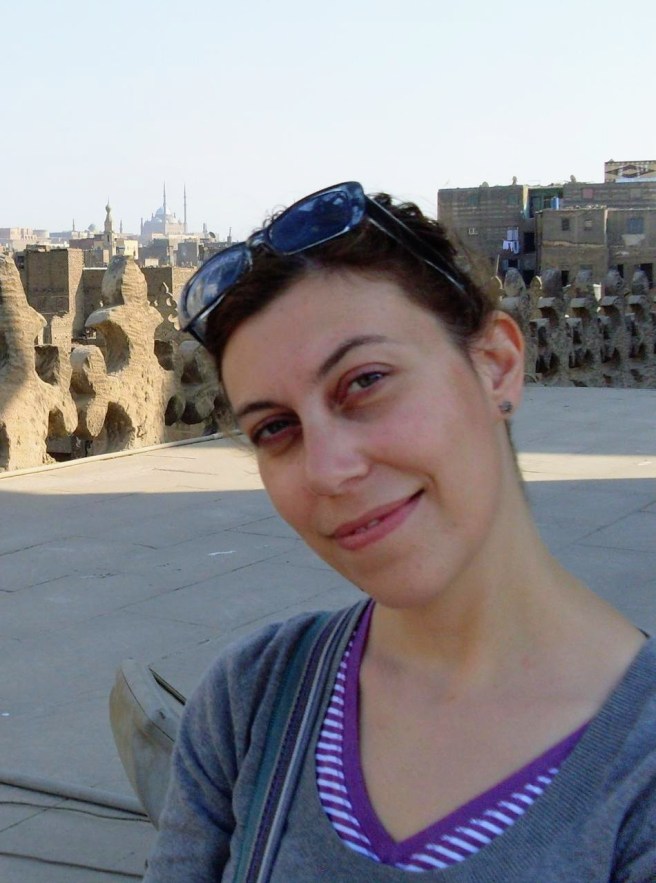
Postdoctoral Researcher in Osteolarchaeology: Dr Veronica Tamorri (2024-)
Veronica holds a PhD in Archaeology from Durham University (United Kingdom). For her doctoral thesis, she employed archaeothanatology to analyse the archaeological documentation of over 3000 Egyptian burials dating to the 4th-3rd millennium BC. Veronica Tamorri was a Marie Skłodowska-Curie Postdoctoral Fellow at the Laboratory for Human Osteoarchaeology, Faculty of Archaeology. Veronica’s project – WOmen-PRO – combined bioarchaeological methods and archaeothanatology to investigate the life histories and burial rituals of female individuals in the Nile Valley during the 4th-3rd millennium BC transition to complex society.

Postdoctoral Researcher in Old Norse language and literature: Dr Alex Wilson (2024-)
Alex completed his PhD in Old Norse studies at Durham University in 2018, funded by an AHRC Doctoral Scholarship. He has since held teaching and research posts in the Universities of Tübingen and Stuttgart, and is a member of the core research team for the international project 'The Íslendingasögur as Prosimetrum' (Tübingen–Cambridge, DFG/AHRC). He heads WP5 'Body-Language', investigating the words, concepts, and motifs used to distinguish persons across Old Norse literary and legal texts.

Alex's research centres on the textual sources of medieval Scandinavia and Iceland, with a focus on the socio-political aspects of the Icelandic sagas and their interaction with practices of violence, legality, and community. His doctoral research analysed these concepts as they appear in the Icelandic outlaw sagas; his monograph on the subject, The Politics of the Old Icelandic Outlaw Saga, is forthcoming with Boydell and Brewer. His recent publications include narratological analyses of Old Norse sources, especially prosimetric sagas, and the construction of desire, sexuality, and masculinity in medieval texts.

PhD Researcher in Body-Imagery:
Elisabeth Aslesen (2022-)
Elisabeth is a recent MPhil graduate and Research Coordinator at the Department of Archaeology, Conservation and History at the University of Oslo. In line with her research interest in archaeological knowledge production and identity construction, her MPhil thesis, “The Root of All: Gender, identity and difference in 4th-6th century Voss and Hardanger”, is a re-theoretisation of archaeological gender categorisation in mortuary material. The thesis was nominated for the Centre for Gender Research (STK) award 2020 at the University of Oslo.
Elisabeth heads WP4 of the Body-Politics project, investigating how anthropomorphic imagery relates to concepts of personhood and the body in the Iron Age. Elisabeth’s PhD project is preliminarily titled Bodied Objects: Personhood and imagery on clothed objects from Norway in the first millennium CE.
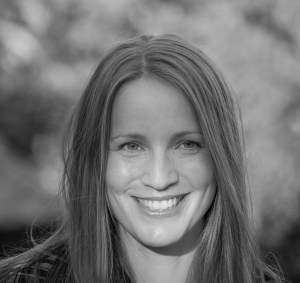
PhD Researcher in Human-Animal Relations: Renate Larssen (2022-)
Renate has a MSc in Ethology from Linköping University in Sweden, specializing in equine behaviour. From 2020 to 2022, Renate was the chairperson of the Swedish Association of Academic Ethologists.
For her Master’s thesis she researched the effects of training methods on the horse-human relationship. Her research paper “Regular positive reinforcement training increases contact-seeking behaviour in horses” has recently been published in Applied Animal Behaviour Science.
For her PhD project “Living with humans: how animals shaped early medieval Northern Europe (400-1100 CE)”, Renate applies current knowledge of animal behaviour, emotion, and cognition to interpret the lived experiences of horses, dogs, and sheep, as well as their relationships with humans.
This PhD post is funded by the University of Leicester’s Future 100 scheme.
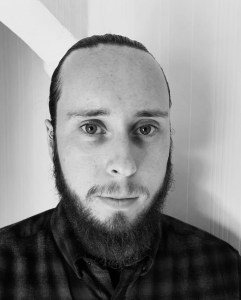
PhD Researcher in childhood and the life-course: Bradley Marshall (2022-)
Brad recently completed an MSc in Archaeology at the University of Edinburgh. For his Masters’ thesis he explored female agency and involvement in Scandinavian raiding, conquest, and migration in England during the eighth to eleventh centuries. This included exploration of sex-ratio disparities, infanticide, female warriors, and a reappraisal of the scale of female mobility and migration; including original isotopic analyses on human remains currently being prepared for publication.
Brad’s PhD project focuses on the work package on childhood and the life course and is preliminarily titled Gendered and social status disparities in the physical and cultural lifeways of children in Iron and Viking Age Scandinavia. He investigates the influence of gender and social status on children’s diet, nutrition, pathology, morbidity and mortality, the interconnectedness of these factors with death and burial, and how childhood and children’s bodies were conceived within contemporary populations.
Project friends and affiliates

Dr Katherine Marie Olley, Assistant Professor of Viking Studies, University of Nottingham
Katherine’s research interests include kinship, childbirth, the body, and emotions. Her first monograph Kinship in Old Norse Myth and Legend was published by Boydell and Brewer in July 2022 and she is currently working on her second monograph, Childbirth in Old Norse Literature, which explores the depiction and cultural significance of childbirth in medieval Iceland. Engaging with anthropological analyses of birth as a moment of social microcosm, the book will examine how birth narratives reflect and challenge the power structures and values of Old Norse society.
Katherine received her DPhil from the University of Cambridge in 2019. Her doctoral research, supervised by Dr Judy Quinn and funded by an AHRC-Trinity studentship from the Arts and Humanities Research Council Doctoral Training Partnership (2015–18), explored the nature of kinship in Old Norse myth and legend, focusing especially on parent-child relationships. She subsequently went on to become a Teaching Fellow in Old Norse at University College London (2018–19) before joining St Hilda’s College, Oxford as the VH Galbraith Junior Research Fellow in Medieval Studies in September 2020.
Katherine was a postdoctoral researcher on the project in 2023 before securing a post in Nottingham, and remains a collaborator and research affiliate on the project.

PhD Researcher in mortuary identities, Emma L. Thompson (2023-)
Emma recently completed an MRes in Archaeology at the University of Birmingham, where she also completed her BA in Ancient History and Archaeology. During this time, she received both the Bladon Carter Prize and Donald Dudley Memorial Award for outstanding achievement. In 2018, Emma co-authored a report on an assemblage of Roman pottery, ‘Alcester, Birch Abbey’, published in West Midlands Archaeology.
In her Master’s thesis, Emma investigated the relationships between rank and gender in Viking Age burials across Jutland, proposing a theoretical framework around conditional identity interfaces. In her doctoral project, ‘Collision and Cohesion: (re)negotiations of mortuary identities in England and Denmark (c. 800-1100 CE)’, she will further explore this concept by examining how migration and changing religions influenced the construction of identities in graves and cemeteries.
This PhD is funded by the Midlands4Cities Doctoral Training Partnership and Emma will be closely collaborating with the Body-Politics project.

Postdoctoral researcher Dr Kevin Kay (2024-)
Kevin’s research centres domestic life as a political practice in prehistory. His PhD (Cambridge, 2020) looked at the biographies of houses at Neolithic Çatalhöyük, focusing how houses were modified as they were inhabited. His Leverhulme Early Career Fellowship (Leicester, 2021-2024) expanded to look at domestic politics as a factor in mobility in Neolithic communities from Greece to Jordan. More broadly, Kevin has an eclectic interest in social theory, linking the study of everyday life and the body through feminist and posthumanist philosophy of science. This includes an ongoing collaboration around gender and dehumanisation in Viking worlds (e.g. Eriksen and Kay 2022, ‘Reflections on Posthuman Ethics’; Kay and Eriksen 2024, ‘Mapping collaborations’).
Kevin is Postdoctoral Research Associate in Social Theory and Kinship on the Philip Leverhulme Prize-funded project ‘Making Oddkin in Later European Prehistory’. The project will combine genetic evidence with a rethinking of what kinship meant (beyond genetic descent) in Iron and Viking Age northern Europe, with special attention to the roles of subaltern and more-than-human beings in kinship.
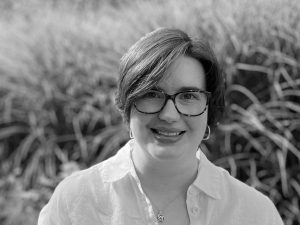
Dr Sam Leggett, Lecturer in Computational Archaeology, University of Edinburgh
Sam has recently worked as a postdoctoral research assistant on the “Women of the Conversion Period” project at the University of Oxford with Professor Helena Hamerow (2021), before joining the School of History, Classics and Archaeology at the University of Edinburgh (2022-current), as a Leverhulme Early Career Fellow, and subsequently as Lecturer in Computational Archaeology.
Her research interests include early medieval biomolecular archaeology, especially the use of isotopes to investigate diet, migration and community dynamics in Northwest Europe. Her current projects include the Leverhulme Trust funded projecy”ArchaeoFINS: medieval Archaeology of Fishing around the Irish and North Seas”, which is triangulating isotopes on humans and animals, with pottery residues and other data to investigate the Fish Event Horizon and the interplay of ecology and economy in the region; investigating the Roman to Early Medieval Transition at Alton (Hampshire) with Prof. Robin Fleming; and isotopic work on the Priory Orchard, Godalming cemetery (c. 850-1200 AD).
Sam is part of Bradley Marshall’s doctoral supervisory team, and a collaborator on aspects of the project’s biomolecular research.

Dr Vasiliki Louka, University of Leicester
Vasiliki is a determined forensic anthropologist and Teaching Fellow at the University of Leicester. Her research is predominantly within, but not limited to trauma analysis, 3D modelling, commingled remains as well as the study of violence. Vasiliki’s PhD research explored violence in 19th and 20th– century European armed conflicts through a methodologically and theoretically interdisciplinary framework which implemented the skeletal trauma analysis and sociological contributions to political and physical violence. Apart from research, she is a practising consultant working with international partners on the recovery of human remains as a result of conflict, while she also has experience in the management of fatalities from natural disasters.
Vasiliki is working on creating photogrammetry models of human remains for the Body-Politics project.

Research Support Administrator: Krupesh Mistry
Krupesh administratively supports a number of research groups across disciplines in the social sciences at the University of Leicester. He studied Biological Sciences BSc at the University of Leicester and has since worked at two research facilities; Medical Research Council and Leicester Diabetes Centre. He has experience in organising scientific conferences, customer relationship management, as well as higher education communications and marketing skills.
International advisory board
Professor Neil Price, Uppsala University
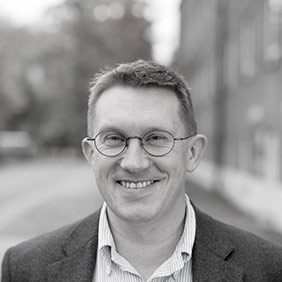
Professor Lotte Hedeager, University of Oslo

Professor Marie Louise Stig Sørensen, University of Cambridge
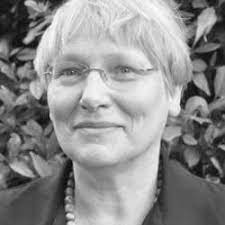
Dr Stefka G Eriksen,
The Norwegian Institute for Cultural Heritage Research

Dr Ben Raffield, Uppsala University

Dr Elise Naumann, The Norwegian Ministry for Research and Higher Edication
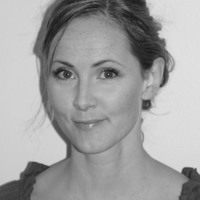
Dr Oliver Harris, University of Leicester
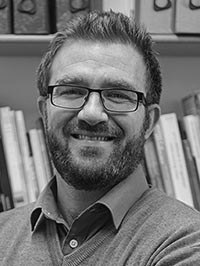
Dr Sarah Inskip, University of Leicester
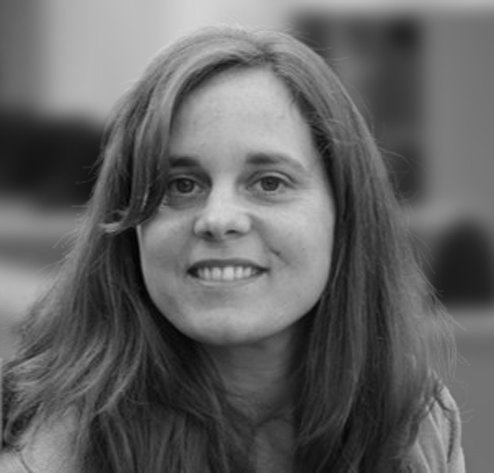
Dr Jo Appleby, University of Leicester
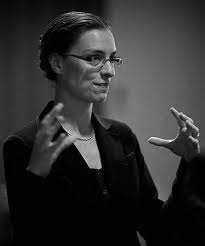
 Body-Politics